
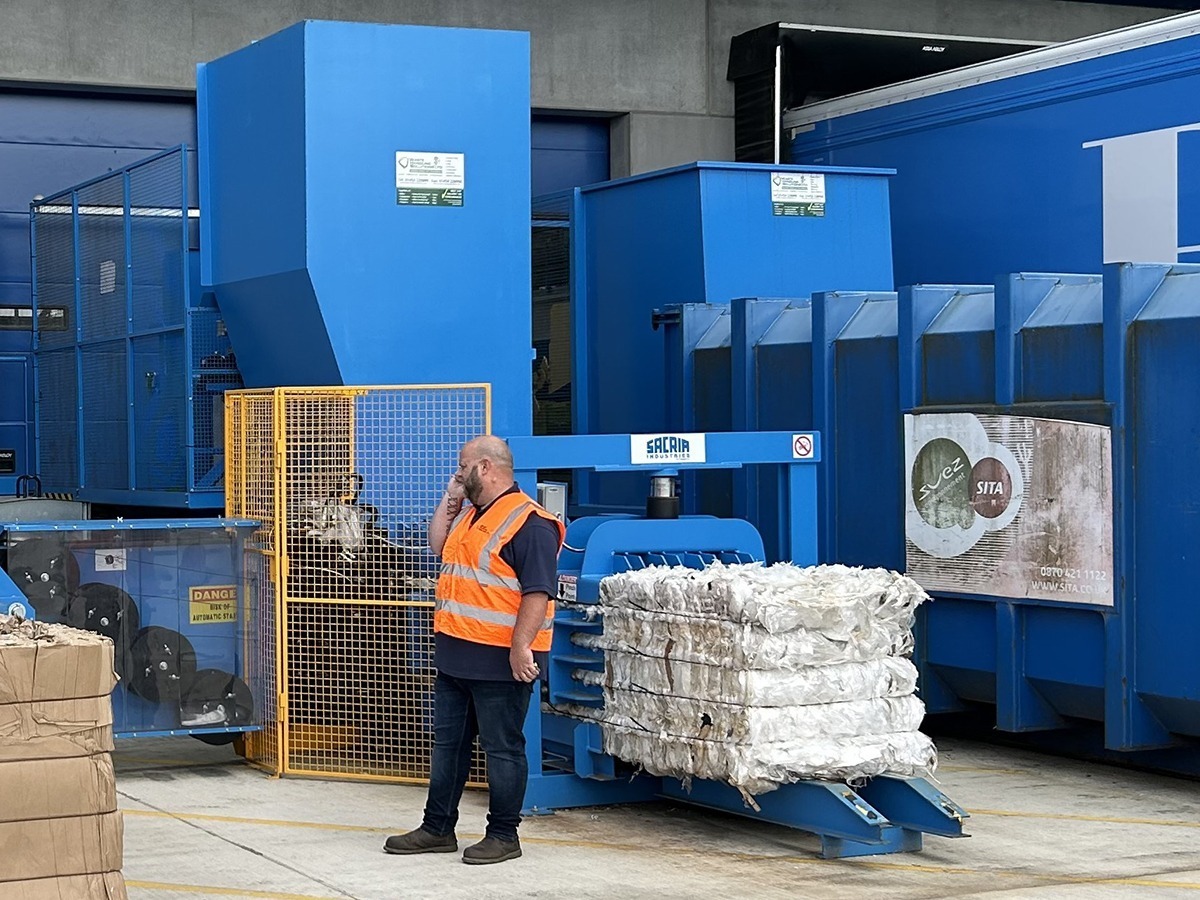
The True Cost of Waste Handling
Many clients underestimate the true cost of waste handling. As there are hidden costs of manual waste handling
- Labour: collection internally within the site/building, transport to the current baler, time taken to load the manual baler, tying each bale by hand, cleanup.
- Downtime: production interruptions for waste removal and hold ups
- Transport & disposal: higher volume of site traffic, due to less-dense loads & subsequently increase haulage frequency
- Space & logistics: areas used to store & bale, forklift time, traffic flow disruption.
- Compliance & safety: HSE issues, PPE, training, incident costs and injury risk.
Benefits of installing a fully automatic baler
Labour reduction: Cut handling down by an average of 66% & reallocate staff to other jobs (more productive), potential for a lower headcount or a reduction in overtime.
Lower haulage & disposal fees: denser loads = fewer pickups = lower per-tonne handling costs.
Increased throughput & uptime: continuous on-line compaction minimizes production stops.
Improved recycling revenue: cleaner environment & uniform bales fetch higher prices.
Floor space reclaimed: less waste storage areas needed.
Safety & compliance improvements: fewer manual lifts, reduced incident risk, reduction in insurance premiums
The biggest benefit? Predictable operating costs and easier sustainability reporting.
If your company are looking for a professional assessment of your current waste arrangements, then call our expert team to assist you.