
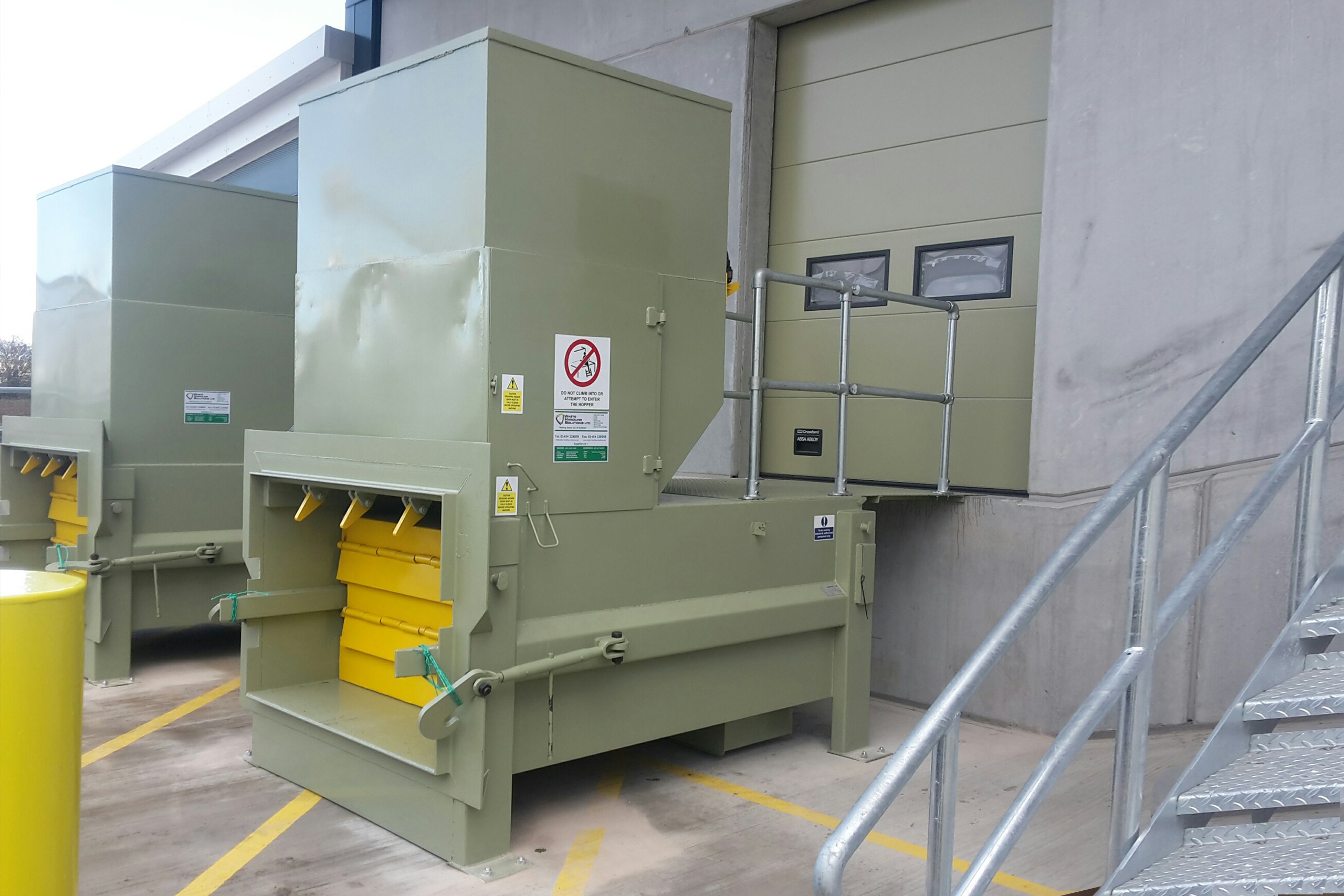
What Is A Static Compactor?
A static compactor is a powerful on-site machine designed to significantly reduce the volume of waste by compressing it into an attached container. Unlike portable compactors, the static unit stays permanently bolted to the ground while only the waste container, commonly known as a “roll-on-off” container, is removed for emptying.
Waste is fed into the compactor’s hopper manually or via various systems, including chutes, grabs, pneumatic feeders, or bin lifts compatible with standard 1100-litre wheelie bins. Using robust, industrial-grade hydraulic rams, a static compactor can generate up to 34 tonnes of force, compacting waste efficiently to a minimum of 4:1, sometimes as high as 10:1, depending on the waste being processed.
The machine also alerts you when the container is 75% and 100% full, so you know exactly when to contact WHS or your waste contractor to exchange the container.
How Does a Static Compactor Work?
Static compactors are designed for simplicity, durability, and high performance. Their operation involves the following steps:
- Waste Loading: Waste materials, including wet waste, dry waste, or bulky waste, are introduced into the compactor via the hopper. Options like shaped hoppers or bin lifts can be customised based on business requirements.
- Compression: The machine’s hydraulic ram compresses the waste into a connected container, reducing waste volumes several times.
- Container Exchange: Once full, the waste container is detached, transported for disposal, and replaced with an empty container.
This process optimises site cleanliness, reduces waste disposal costs, and limits manual labour.
Types of Waste Managed by Static Compactors
Static compactors efficiently manage wet waste, ideal for restaurants, supermarkets, and food production facilities. Here’s an overview of the waste materials they can process:
1. Wet Waste
These compactors are ideal for environments such as restaurants, supermarkets, and food production facilities. Static compactors prevent liquid leakage into the surrounding area, ensuring a clean and safe site.
2. Dry Waste
From packaging materials to low-value mixed waste, static compactors handle dry waste effectively. This type of waste is common in retail, logistics, and office settings.
3. Bulky Waste
Static compactors are designed to compress bulky waste, including items like broken pallets, large cardboard boxes, and other oversized materials.
4. Black Bag Waste
Black bag waste from households, offices, and public spaces is a common stream for static compactors. The compression of this waste significantly reduces its size, ensuring efficient disposal.
5. Mixed Waste
Static compactors provide an all-in-one solution for mixed waste disposal for facilities dealing with multiple waste streams, such as industrial sites or construction areas.
Key Features of Static Compactors
1. High Compaction Levels
Static compactors excel at compressing large volumes of waste into dense blocks, including black bag waste, broken pallets, and light waste. This maximises storage space in the container and reduces transportation needs.
2. Continuous Operation
Unlike portable compactors, static compactors do not need to leave the site to empty waste. Static compactors only remove the container, ensuring minimal downtime and uninterrupted operation.
3. Customisation for Various Waste Streams
Businesses can tailor their static compactor setup to handle specific waste types. Options include:
- Hoppers are optimised for wet waste or low-value mixed waste.
- Additional access features, such as safety cages or tipping skips.
- Variations in container sizes and capacities to suit business waste volumes.
4. Enhanced Durability
Built with heavy-duty components, static compactors are designed for continuous operation in demanding environments, ensuring long-term reliability.
5. Intelligent Monitoring
Many models feature advanced monitoring systems to alert users when the container is nearing full capacity. This prevents overfilling and ensures efficient waste collection scheduling.
Understanding Compaction Ratios and Performance
One of the key advantages of static compactors is their ability to achieve high compaction levels, directly impacting waste management efficiency. Here’s how compaction ratios and performance work:
1. Compaction Ratios
A compaction ratio measures how much the waste volume is reduced during the compaction process. Static compactors typically achieve ratios of:
- 4:1 for general waste, such as office or household refuse.
- Up to 10:1 for lightweight materials like cardboard or plastic.
2. Benefits of High Compaction Performance
High compaction performance reduces the number of collections needed, leading to:
- Lower waste disposal costs.
- Reduced use of transport containers.
- Fewer trips to disposal facilities minimises environmental impact.
3. Factors Influencing Compaction Levels
Several factors can influence the efficiency of a static compactor, including:
- The type of waste compacted waste (e.g., dense waste material vs. light waste).
- The design and pressure capacity of the hydraulic system.
- Additional features like shaped hoppers or tailored feed options.
Customisation Options for Static Compactors
1. Feed Options
Static compactors offer a range of feed options to suit varying operational needs. Businesses can choose from:
- Hoppers for loading loose or mixed waste disposal.
- Combined hoppers are used to process both wet waste and dry recyclables.
- Dock-level loading systems to streamline waste feeding in warehouses or logistics hubs.
2. Additional Features
Enhancements such as safety cages, tipping skips, and control units improve usability and worker safety. Businesses may also specify:
- Choice of motor rating for energy efficiency.
- Choice of colours to align with site branding or safety protocols.
3. Capacity Sizes
Static compactors are available in various container sizes to match different compaction volumes. These machines can handle everything from low-value mixed waste to large-scale industrial by-products, ensuring flexibility for all operational needs.

Why Choose a Static Compactor?
Choosing a static compactor is about making waste management more cost-effective, efficient, and sustainable.
Cost Savings
Every time a waste container is exchanged or emptied, there’s a transport cost involved. If you’re using open roll-on-off skips, these transport costs typically run around £150-175 per exchange. With a compaction ratio of 4:1, you’ll reduce the number of exchanges needed, saving you up to £450-525 each time. These savings add up quickly, significantly reducing your waste management costs.
Less Site Traffic and Improved Safety
Reducing the amount of waste collected decreases vehicle traffic on-site, making your workspace safer and more efficient. Additionally, because waste is contained within the compactor’s bin, there’s less risk of waste scattering, which helps maintain a cleaner site and lowers fire hazards, potentially reducing insurance premiums.
Increased Productivity
A static compactor streamlines waste handling, reducing the need for double handling and improving your team’s productivity. The less time spent managing waste, the more time your team can spend on what really matters in your core operations.
Environmental Benefits
By compacting waste, you cut costs and reduce your company’s carbon footprint. Fewer collections mean fewer vehicle trips, contributing to a more sustainable operation.
Applications of Static Compactors
Static compactors are versatile and suitable for various industries. Common applications include:
- Retail and Hospitality: Efficiently handle packaging, food waste, and general black bag waste.
- Construction and Manufacturing: Manage bulky waste, window frames, and broken pallets.
- Public Sector: Local councils and household waste sites use static compactors to process large quantities of mixed waste.
- Logistics and Warehousing: Compress low-value mixed waste and packaging materials for efficient disposal.
Innovative Design of Static Compactors
Static compactors have cutting-edge features to enhance usability, safety, and performance. These innovations make them suitable for diverse industries and waste types.
1. Feed Hopper Configurations
The compactor feed hopper plays a crucial role in waste loading. Options include:
- Combined hoppers for multiple waste streams.
- Hoppers for loading loose or mixed materials.
- Customised shaped hoppers to handle specific waste requirements.
2. Safety Enhancements
To ensure worker safety, many static compactors feature:
- Safety cages to prevent unauthorised access during operation.
- Secure doors for cylinder space to avoid accidental exposure to moving parts.
3. Space-Saving Designs
Static compactors are designed to fit within an average car parking space, making them ideal for sites with limited space. Their compact footprint doesn’t compromise performance, allowing businesses to manage large amounts of waste.
4. Continuous Operation
Unlike other waste management solutions, static compactors enable continuous operation, ensuring no downtime when the container is removed for disposal. This feature makes them a preferred choice for high-volume waste generators.
Static Compactors vs Portable Compactors
Key Differences
| Feature | Static Compactor | Portable Compactor |
| Installation | Fixed on-site | Movable, requires transportation |
| Waste Handling | Continuous operation, only container removed | Downtime for emptying |
| Durability | Less prone to damage | Higher risk of wear and tear |
| Customisation | Wide range of bespoke options available | Limited by design |
Why a Static Compactor Over a Portable Compactor?
Customisation
Static compactors are more versatile, offering larger loading apertures to handle bulkier waste materials.
Minimised Downtime
A static compactor removes only the waste container, meaning there is no downtime between collections. On the other hand, portable compactors must be taken off-site for emptying, leaving you with a period during which waste cannot be processed.
Reduced Risk of Damage
Portable compactors are often prone to damage when taken off-site by waste contractors, leading to potential conflicts. A static compactor, however, stays on-site, reducing this risk and ensuring your equipment remains in peak condition.
By opting for a static compactor, you’re choosing a solution that will save you time, money, and effort while contributing to a cleaner, safer, and more productive site.
How Static Compactors Improve Operational Efficiency
1. Reduced Labour Costs
Manual waste handling can be time-consuming and expensive. Static compactors automate the compaction process, reducing the need for labour-intensive tasks and freeing employees for more valuable activities.
2. Handling Bulky and Challenging Waste
Static compactors are engineered to process bulky waste like window frames and broken pallets. Their powerful hydraulic systems easily manage these materials, ensuring efficient compression of waste materials without strain on the machinery.
3. Consistent Compaction Levels
Achieving consistent compaction levels is essential for maximising container space. Static compactors are designed for reliability, ensuring uniform waste density regardless of the material’s composition.
The Importance of Compaction Technology in Modern Waste Management
Static compactors rely on advanced compaction technology, enabling businesses to address waste disposal challenges efficiently. This technology ensures consistent compression of waste materials into a dense, compact form, offering the following benefits:
- Improved Carbon Footprint: By reducing waste volumes, static compactors minimise the number of trips required for waste transport, directly lowering emissions.
- Space Efficiency: Compacting waste creates more room in containers, reducing the need for additional transport containers and saving businesses time and money.
- Adaptability to Waste Types: Static compactors provide a solution for all waste streams, from dry recyclables to light and dense waste material.
As businesses focus on reducing waste disposal costs, investing in machinery with high compaction performance becomes essential.
The Role of Static Compactors in Industrial and Commercial Waste Management
Static compactors are indispensable for industries and businesses producing large amounts of waste. Their robust design and versatility make them suitable for handling diverse waste types while addressing key operational challenges.
1. Handling Liquid Residue
Static compactors provide a reliable solution for industries dealing with wet waste or materials with liquid residue. Leak-proof systems and enclosed containers ensure that garbage is compacted securely without spillage, reducing environmental contamination and site hazards.
2. Streamlining Mixed Waste Disposal
Industrial sites often generate mixed waste, including low-value mixed waste and dry recyclables. Static compactors simplify this process by consolidating various waste streams into a single compacted unit, ready for transport to disposal facilities or recycling centres.
3. Customised for Heavy-Duty Use
These machines are built to handle dense waste materials, such as metals, plastics, and other bulky waste. The availability of high-capacity models with reinforced hydraulic systems ensures consistent compaction performance even with tough materials.
Why Static Compactors Are the Superior Choice
- Continuous Operation: Unlike portable models that require downtime during off-site waste disposal, the compactor remains functional.
- Versatility: Static compactors offer different features and configurations, including dock-level loading and shaped hoppers for various waste types.
WHS: Your Trusted Partner in Waste Management
Waste Handling Solutions (WHS) is a leader in the waste management industry in the UK, offering a comprehensive range of compactors, balers, and ancillary equipment tailored to meet your needs.
Key Products and Services
- Static Waste Compactors: A range of models designed for various compaction levels and capacities.
- Balers: Ideal for compressing recyclable materials such as cardboard and plastics.
- Customised Feed Options: Loading docks, bin lifts, and pneumatic feeders.
A Comprehensive Range of Waste Solutions
WHS is not just a supplier; it offers a comprehensive range of machinery and services tailored to meet diverse needs. Their expertise spans:
- Balers for compressing cardboard, plastics, and other recyclables.
- Compactor units for specialised business waste handling.
- Choppers for reducing the volume of waste strapping, whether made of metal or plastic
Why Choose WHS?
- Customisation: WHS designs bespoke systems, including hoppers, safety features, and electrical requirements, ensuring the machinery meets exact business requirements.
- Expertise: With over 2 decades of experience in waste management, WHS provides reliable and innovative solutions.
The Future of Waste Management
Static compactors represent the next step in achieving an improved waste management system. With their ability to process various waste streams, reduce operational costs, and minimise environmental impact, they are an essential tool for modern businesses. By adopting these machines, companies can:
- Optimise their compaction process.
- Reduce dependency on disposal facilities.
- Achieve long-term sustainability goals.
As industries focus more on reducing waste, static compactors offer a reliable solution to handle everything from light to dense waste materials.
Get a Free Waste Audit Today
Not sure which type of compactor suits your business? WHS offers a free waste audit to help you:
- Analyse your current waste volumes and disposal processes.
- Identify cost-saving opportunities.
- Explore tailored solutions for your unique business requirements.
Common Questions About Static Compactors
1. What Types of Waste Can Be Processed?
Static compactors handle various waste streams, including:
- Mixed recyclables and dry recyclables.
- Bulky waste like pallets and window frames.
- Food waste and black bag waste.
2. Are Static Compactors Suitable for Small Businesses?
Yes! Static compactors are available in different capacity sizes, making them suitable for small businesses managing moderate waste volumes.
3. Can I Rent Instead of Buy?
WHS offers flexible rental options for businesses looking to avoid upfront costs while benefiting from an improved waste management system through purchasing, renting, or leasing the waste management equipment you need.
How to Choose the Right Static Compactor
Selecting the right compactor depends on several factors, including your business’s waste profile and operational requirements.
1. Assess Your Waste Type
Different static compactors are suited to different waste streams. Consider the following:
- For wet waste, opt for compactors with leak-proof designs.
- For bulky waste, choose models with high-pressure hydraulic systems.
Let WHS help you with a free waste survey with one of our experts.
2. Evaluate Your Site’s Capacity
Measure the available space to determine the appropriate machine size. Most facilities can tailor static compactors to require minimal additional access space.
3. Customisation and Features
Look for features that match your needs, such as:
- Specific compaction capacity to handle your average waste volumes.
- Specialised hoppers or safety enhancements for your team.
4. Prioritise Maintenance
Static compactors require regular maintenance to ensure peak performance. For proactive upkeep, consider models with easy servicing access and built-in diagnostics.
In Summary
Investing in a static compactor is smart for businesses looking to streamline their waste management systems. From significant financial savings to environmental benefits, our machines offer an ideal solution for handling a broad range of waste streams with the added benefit of making money back from some of your waste. Partnering with Waste Management Services (WHS), you can access innovative waste management technology, expert advice, and exceptional after-sales support. Contact us today to discover how a static compactor can transform your operations and save your business money.
Balers we Offer
We offer a range of balers for sale or rental. View our balers available and prices:
Compactors we Offer
We offer a range of balers for sale or rental. View our balers available and prices:
Free Waste Audit
Call, email or enquire via our free waste audit form to contact a waste specialist from Waste Handling Solutions to find out more or arrange a free waste audit.